Reading Rainbow was Right
The neuroscience of book hangovers and writing instincts

Every Tuesday and Thursday, I publish personal essays and fiction that find new ways to look at the everyday.
We’ve all heard of a book hangover. You know that feeling you get when you finish a novel, and you just don’t feel like yourself? Like you lost something?
My book hangovers last a really long time. So much so that I end up rereading my favorite stories because I viscerally miss the characters and world. And then it’s over again, and I miss them again. Rinse and repeat.
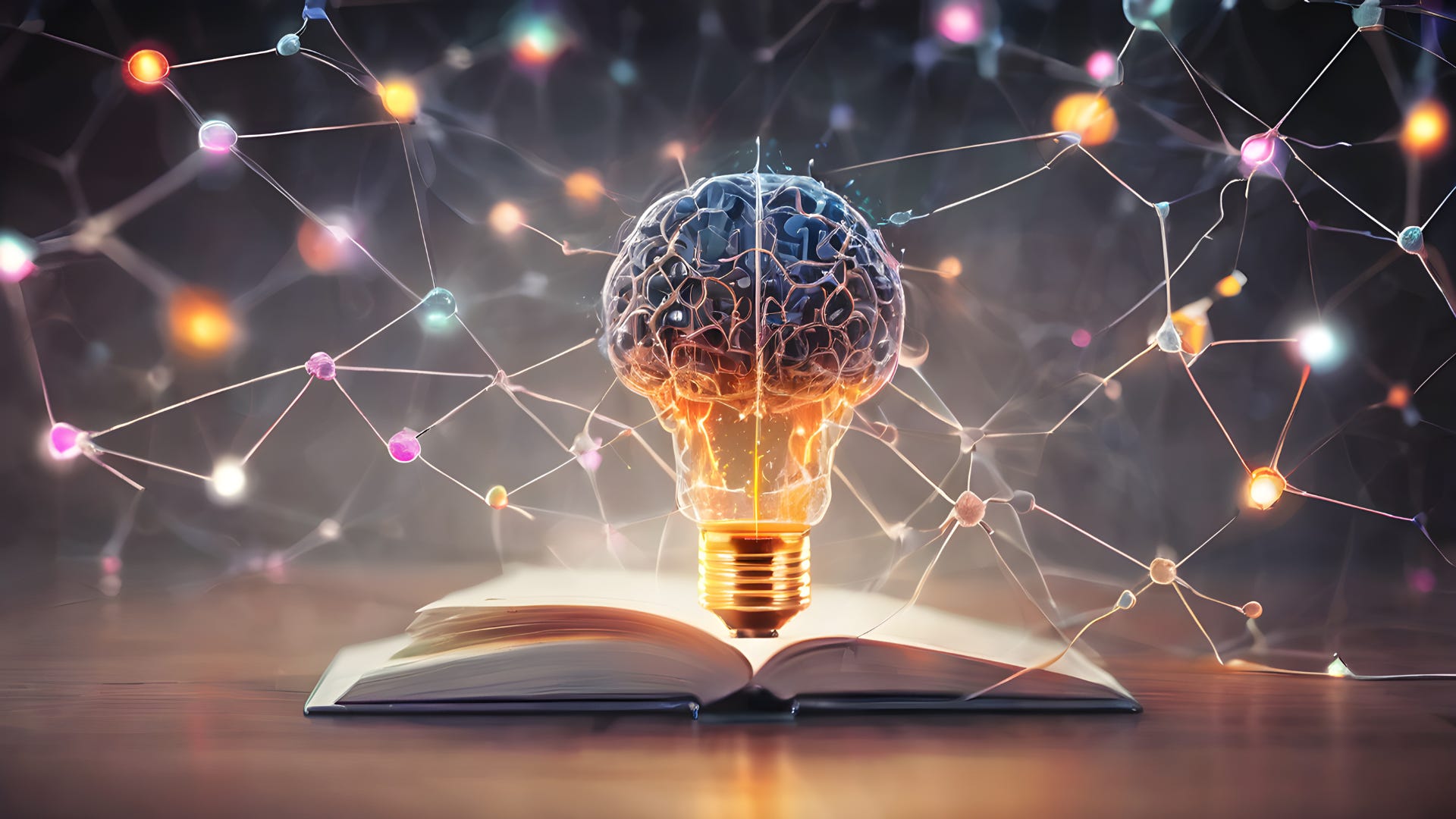
I recently learned that a 2013 Emory University study found that your brain builds neural pathways around the characters in the books you read—and they stay there for up to five days after finishing a novel, which means that you’re not just missing a fictional person but an experience your brain has physically encoded. So, my fellow deep readers, the grief of losing the story you’d been living in is very much real.
What causes you to feel so connected in the first place is your mirror neurons. Essentially, when you witness another person’s behavior or emotion, it triggers a response in your brain that reacts as if you were experiencing it yourself. It also means if you read about someone swimming, the part of your brain that lights up while you swim will light up while you’re reading.
Another way to think about it is that our brains can’t tell the difference between what the character is experiencing and what we ourselves are experiencing.
I remember when I first learned this tidbit. I had a really hard time believing it, but once I did, I immediately wanted to pick up a book and dig in. I mean, think of the possibilities. The experiences that are now at your fingertips. The ability not only to watch the characters from the outside but to become them.
This is your default mode network—the engine underneath all of it that runs when you’re not focused on a specific task. It’s what lets you daydream, self-reflect, and recall memories. And most importantly, it’s where your theory of mind lives, which is your ability to simulate other people’s inner worlds. So when you’re reading, your empathetic imagination is dropping you into the story as every character.
This shouldn’t come as a surprise to those of us old enough to have watched Reading Rainbow. They told us we could go anywhere, be anything, and find friends to know and ways to grow. We just needed to ‘take a look. It’s in a book.’
It takes active inhibition to maintain the separation between you and others because your empathetic imagination is your default state.
I’ve heard authors say they just followed where their characters took them, and I thought that was ridiculous. Until I started writing. I don’t necessarily feel like the characters are talking to me as much as the story just sort of falls out of me.
When I tried to articulate this initially, I had trouble because I didn’t understand what was actually happening. Which led me to the most surprising revelation: we have to actively work to separate ourselves from others because our brains’ default is not to.
What does that mean for me as a writer, then?
First, I had to figure out which of the two kinds I am—a planner or a pantser (people who write by the seat of their pants). I’m a planner by nature, so I always assumed I’d fall into the first category, and I do to some degree. I have general outlines and section outlines, and then I make a more detailed chapter outline before I start writing each chapter. Yet despite all that planning, the story somehow takes unexpected turns.
When this happens, I have trouble understanding how I knew where to go if I’d planned something entirely different.
The answer is that the inhibition to the empathetic imagination relaxes further when you write, especially when you enter flow state. It makes sense when you think about it. You can only achieve a flow state after extensive experience creates a specialized network for generating ideas. Once you do, you can release control, allowing the network to do its thing unsupervised. On top of that, the same mirror neurons that get activated while reading activate while writing.
Fortunately for me, being an HSP already heightens my emotional and social pathways because having aphantasia forces me to write without any visual imagery whatsoever. So I don’t see my characters; I don’t even write my characters. Essentially, I am my characters.
You’d think knowing this information would take away some of the intensity. If you know it’s a biological process making you feel the things you’re feeling, doesn’t that lessen the magic of the experience?
For me, the opposite is true. It somehow makes the experience feel even more real.
I spent the last seven months writing the first draft of my novel and finished it yesterday. I can’t even imagine the depth of the neural pathways that have developed over that time. The hangover is going to be intense. At least I have the editing process to keep it at bay for a little longer.
What book gave you the biggest hangover?
If you love to research as much as I do, you should read A Rabbit Hole Kinda Girl.